
ROS runs it.
ROS is a business process execution platform. ViaROS connects the capabilities your applications provide, builds what’s missing, and makes your complete business process executable in ROS.
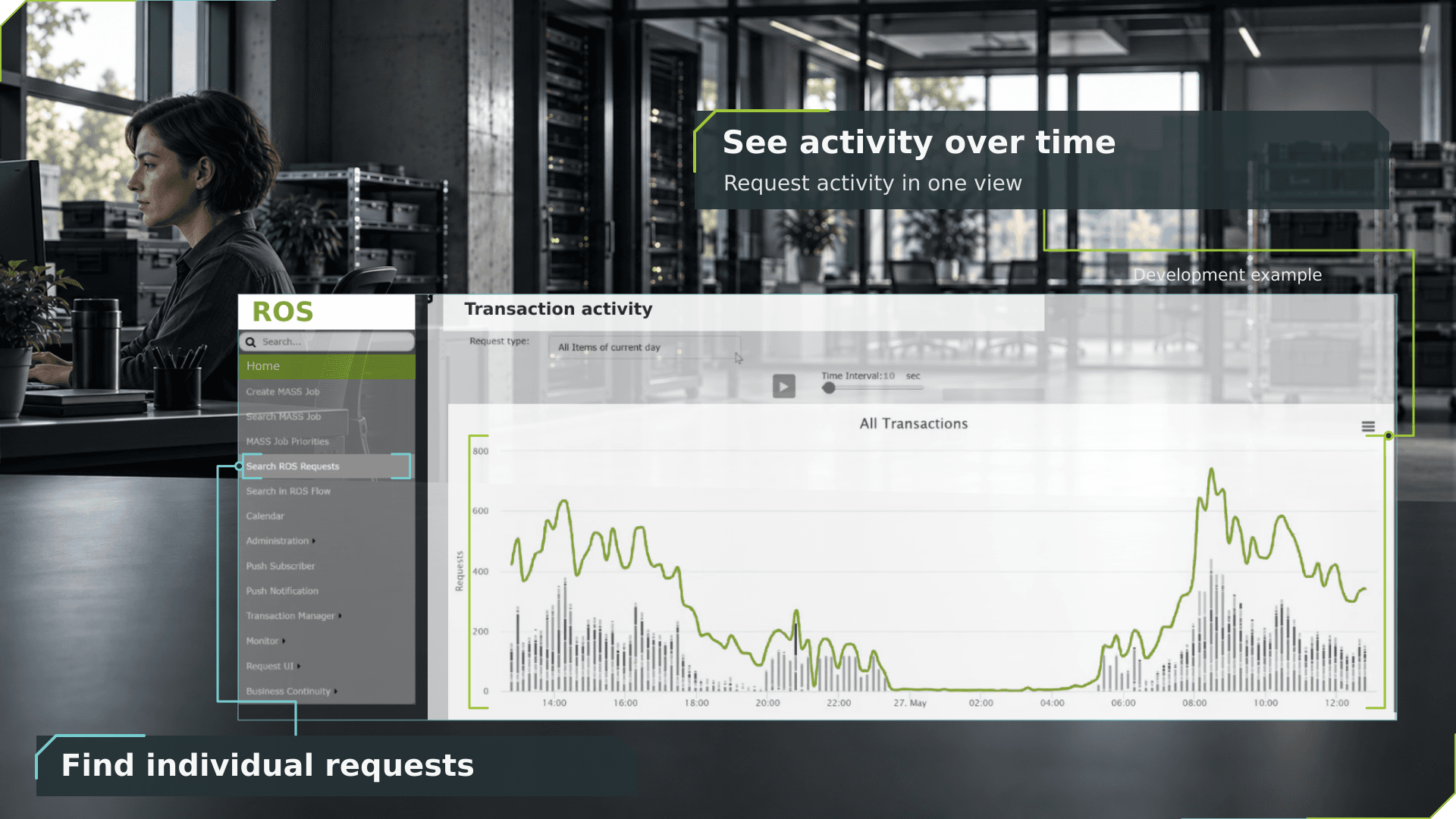
ROS runs the process across systems, verifies whether your completion requirements are met, and preserves each execution’s progress and record. You can see what happened, what was delivered, and what needs attention.
0+
Years in production
000+
Processes running at one operator
Billions
Monthly production volume
000K+
Monthly automatic recoveries
Businesses deliver outcomes.
Enterprise applications are built to do specific jobs well. CRM manages customers. Billing charges. Provisioning activates. Inventory manages resources. The business outcome depends on those functions working together.
Yet the complete process is often scattered across applications, integrations, custom code, manual controls, and people. Each participant can report its own result while no one can confirm whether the full outcome was delivered.
Each application can answer
- Did my assigned task finish?
- Did I accept the request?
- Did I return a response?
- Did I record a status?
The business must answer
- Did the complete process finish?
- Was the intended outcome delivered?
- Where did execution diverge?
- What needs to happen next?
Connecting systems and coordinating steps are necessary. They are not the complete answer. The business needs one process that carries its logic, state, responses, evidence, and definition of complete from beginning to end.
Build the process the outcome requires.
We start with the result your business needs, then identify what already works, what must change, and what is missing.
Define the outcome
01Agree the result, business rules, and checks that confirm completion.
Use what works
02Build on the capabilities already available in your systems.
Fill the gaps
03Add the connections, rules, or functions the complete process needs.
Implement in ROS
04Build, test, and prepare the process for production with your team.
Inside ROS
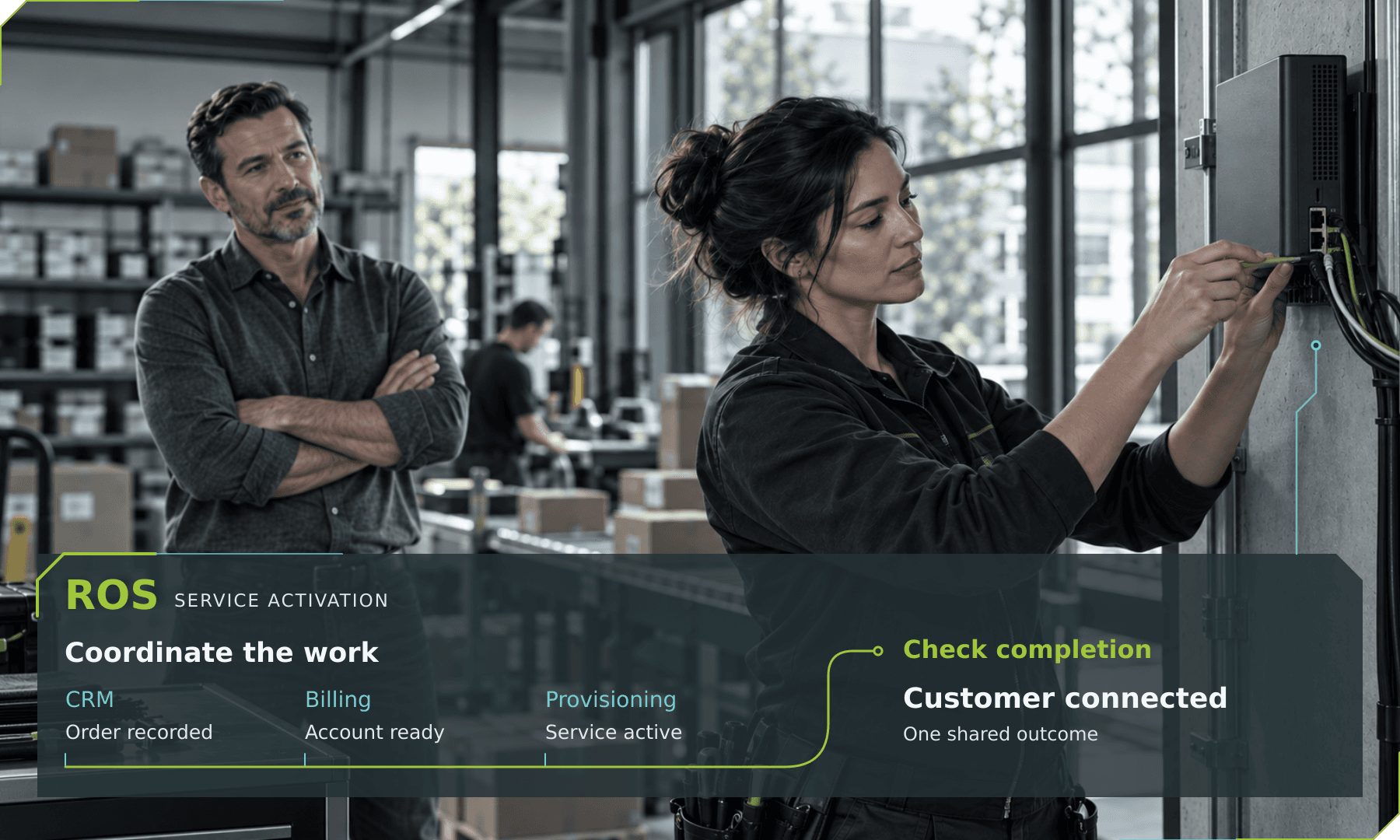
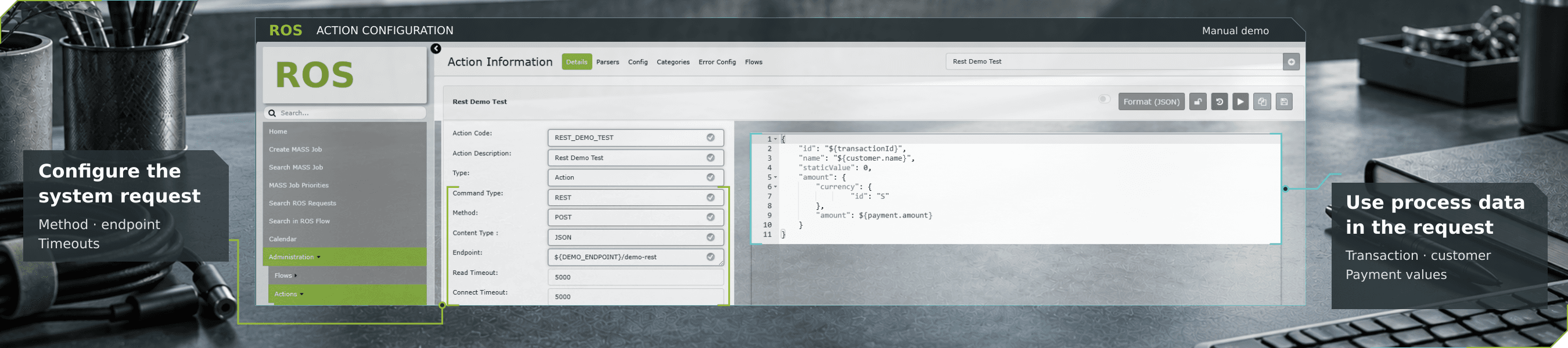
ROS turns that process into an executable model:
The company-specific cross-system process now exists as an executable model the business can run, observe, correct, and evolve. Applications keep performing their specialized functions. ROS determines how those functions work together to produce the intended result.
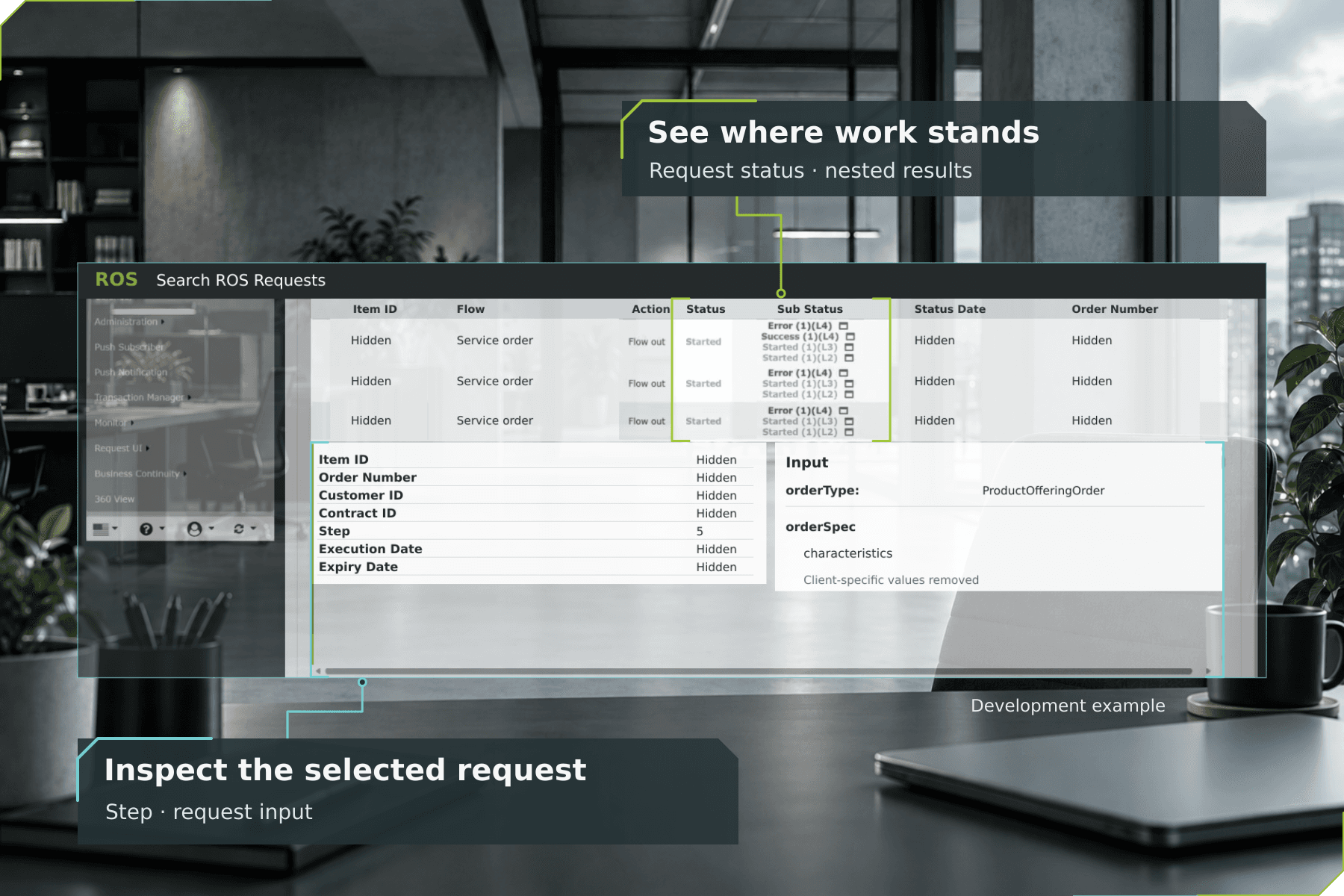
Know the outcome of every execution.
When a process starts in ROS, it does not become a collection of disconnected system activities. ROS keeps it as one execution, with one identity and one current state, across every required step, system, decision, wait, and response.
Synchronous calls, asynchronous responses, parallel work, and long-running dependencies remain part of the same process until its completion requirements are met.
One process in action: Customer activation
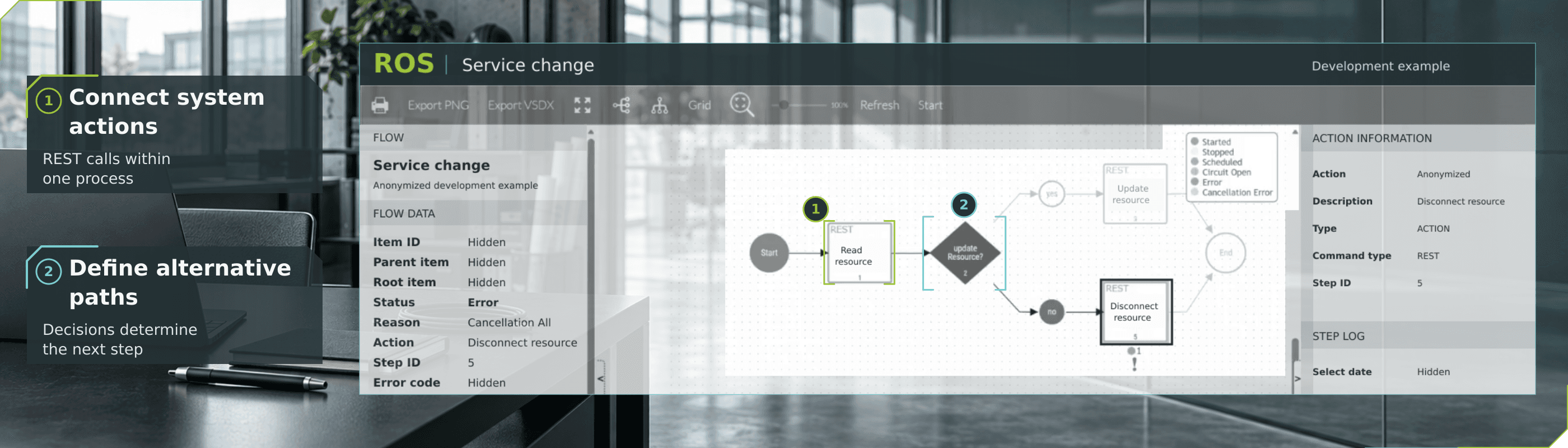
A customer activation may pass through CRM, billing, charging, provisioning, network, and partner platforms. Each application performs its assigned function. ROS keeps the complete activation open until the requirements the business defined for working service have been confirmed.
As the process runs, ROS records the path taken, each system response, every state change, and the final result.
Every system interaction remains tied to the same customer activation.
Completed work, open dependencies, and next actions remain visible.
The process closes only when the required outcome has been confirmed.
System task completion is not business completion. ROS keeps the process accountable until the business-defined result is known.
The same execution model can support orders, payments, account changes, service recovery, migrations, reconciliations, and other complete cross-system processes.
Strengthen the process.
Production will not follow the ideal path every time. The difference is what happens next. ROS keeps the affected execution, its current state, and its supporting evidence intact, so the event can be handled without reconstructing it from separate systems and logs.
The immediate priority is to resolve the affected execution. What happened can then improve how the process handles the same condition in the future.
Recognize
Match the event to a condition already defined in the process.
Respond
Retry, reprocess, resume, bypass, cancel, or compensate as approved.
Verify
Confirm the execution now meets its defined completion requirements.
Preserve
Keep the state, failure point, system responses, data, and conditions.
Resolve
Investigate the cause and restore the intended outcome where possible.
Strengthen
Build and test a response for business approval and future use.
For known conditions, ROS applies the response already built into the process. For new conditions, ViaROS uses the preserved evidence to investigate, correct, and build a repeatable response. The business approves that response before ROS uses it in future execution.

Ready for change.
ROS is designed for the environments businesses actually have, not an idealized technology stack. Processes can span modern and legacy systems, immediate and delayed responses, individual transactions, and high-volume operations.
Operate across the environment
ROS coordinates execution through APIs, web services, events, queues, files, and databases. Synchronous, asynchronous, batched, and parallel work can remain part of the same controlled process model.
ROS is deployed within the customer’s environment and aligned to its infrastructure, security, and access controls.
Change without starting over
When a participating application changes, the company-specific process does not have to be rediscovered with it. ViaROS updates the affected actions, connections, mappings, and validations, then tests the revised process in ROS.
Changing technology still requires engineering. ROS preserves the operating definition the new technology must serve.
Expand control across the business.
One complete process creates immediate value for one critical outcome. ROS delivers its greatest value as more of the company’s critical cross-system processes become complete, executable, and accountable.
The expansion happens one process at a time.
Establish one process
Make one critical outcome executable, measurable, and accountable.
Add related processes
Extend control across shared systems, data, decisions, and dependencies.
Expand business coverage
Bring critical cross-system operations into one operating foundation.
Build operating knowledge
Record how the business executes, corrects, and delivers outcomes.
One complete process creates a dependable outcome. Broad coverage creates an operating advantage.
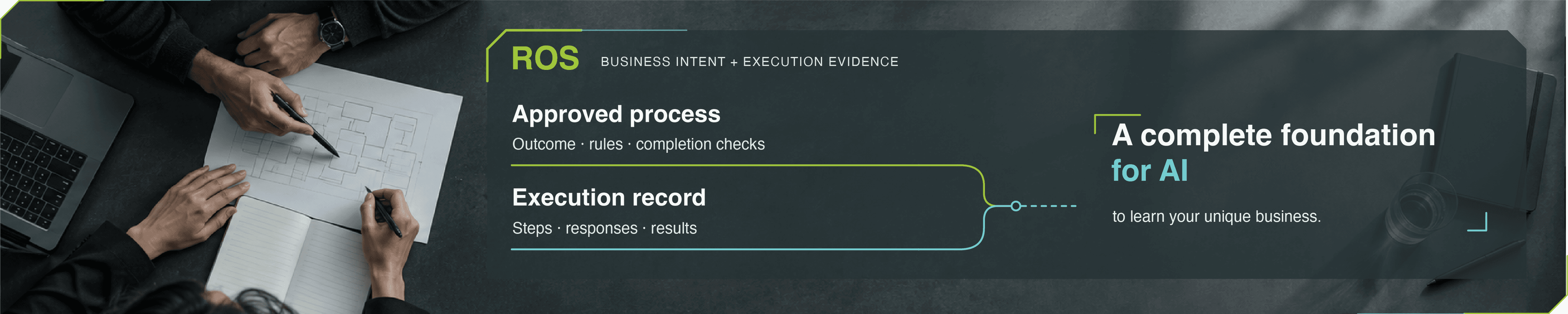
Value now. AI context next.
ROS creates value before AI enters the picture. It makes critical processes executable, keeps every execution tied to its intended outcome, supports recovery when execution diverges, and preserves what happened from trigger through final result.
That same foundation changes what AI can understand.
Approved process
What should happen: the outcome, logic, decisions, limits, responses, exceptions, and completion requirements.
Production record
What did happen: the path, system responses, state changes, divergences, corrections, and final result.
Context for how this business operates.
Where AI starts today
AI working from disconnected application data can see records, statuses, and errors. It must still infer which activities belong to one process, what the business intended, and whether the outcome was delivered.
What ROS already creates
Because ROS runs the complete process, it creates both sides of that context through normal production execution. ViaROS AI is being developed to use it to explain what happened, identify where execution diverged, show the supporting evidence, and help determine the approved next step.
Context that grows with you
One process gives AI context for one outcome. As ROS expands across the company’s critical processes, that context grows into a broader understanding of how the business operates.
ROS provides the proven operational foundation today. ViaROS is building the AI capabilities that will use it.
Support
FAQs
Can we start with one process using our existing systems?
How does ROS know when the business outcome is complete?
How does a process become more reliable over time?
What happens to our process when we change systems?
What does ROS give AI beyond individual system data?
Start with one process that matters.
Choose a critical cross-system process where incomplete execution delays service, creates manual work, puts revenue at risk, or slows change.
Your business defines the outcome. ViaROS builds what is missing and implements the complete process in ROS. That first process delivers operational value now and begins a foundation that can expand across the company.